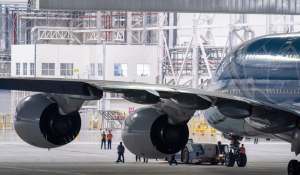
Japanese low-cost long-haul carrier ZIPAIR now gives its pilots an AI forecast of turbulence risk during flight. ZIPAIR and BlueWX announced the service on 8 October 2026 together with MTI (TSE 9438), and pilots can check the forecast in the cockpit from that day. The data travels to the aircraft over Starlink, the satellite network run by SpaceX.
What pilots see
The forecast is BlueWX’s "AI Turbulence Prediction", which sits inside 3DARVI, MTI’s aviation weather system. Pilots get turbulence risk broken down by flight altitude and by forecast time, next to the weather and aviation data they already consult. The purpose is practical: to judge conditions around the planned route and to inform decisions on route and altitude.

3DARVI renders weather in three dimensions on the same screen as flight plans, so dispatchers can pick routes and build plans with the weather in view. It already offered a lightning risk forecast, added in August 2021 with ANA and JAXA. Turbulence is now a second hazard layer on a tool that Japanese dispatch teams use.
How the model is built
BlueWX trains a deep learning model on numerical weather forecasts, weather observations and turbulence data reported by aircraft. This differs from traditional turbulence indicators. Development involved about four years of trial operations with thousands of pilots and flight managers.
From ANA research to a second airline
BlueWX was founded in July 2023, out of joint research by ANA Holdings and Keio University. That research started in 2019 and draws on more than 10 years of weather data and tens of thousands of turbulence reports.
ANA adopted the forecast formally on 28 July 2025, after a four-year evaluation involving more than 2,500 ANA Group pilots. Aviation Wire reports 86% accuracy for the version covering Japanese airspace. With ZIPAIR, the model has a second airline customer, which moves it from a single carrier’s research project to a product other airlines can assess.
BlueWX’s chief executive, Yoshiaki Miyamoto, is an associate professor in the Faculty of Environment and Information Studies at Keio University. BlueWX raised ¥120 million in a Series A round led by the University of Tokyo’s Co-Creation Platform. Other investors were AH-GB Future Innovation Investment, a joint venture of ANA Holdings and Global Brain, and the Keio Innovation Initiative. The company reported more than 4,000 users, retention above 92%, and about 2.7 times the precision of existing forecast data over Japanese airspace.
The Starlink link does a second job
ZIPAIR started offering Starlink internet to passengers on 26 February 2026 and had it fitted on all eight of its Boeing 787-8 aircraft by 5 May 2026. Five months after that, the same connection delivers a forecast to the flight deck. Equipment bought for passenger Wi-Fi now supports a decision made by the crew.
For airline finance and technology leaders, this widens the way a connectivity project is justified. A satellite link on a long-haul fleet is usually weighed against passenger satisfaction and ancillary revenue. ZIPAIR shows a third column: operational data for route and altitude choices made while the aircraft is airborne.
Who it hits
Airlines. Carriers with long-haul fleets and onboard connectivity have the pipe in place. What remains is a technical check: does the model suit their airspace, and does it connect to their dispatch and weather systems? The 86% figure is for Japanese airspace, so airlines flying other regions will want results on their own routes.
OTAs. Long-haul fares sold on carriers such as ZIPAIR depend on how the flight is flown. Better in-flight weather information gives crews more to work with on route and altitude, and that bears on the comfort of the product OTAs sell.
Hotels and DMCs. The direct effect is limited, since the forecast serves flight crews. Properties and ground handlers receiving Japanese guests can still note that a carrier with live weather tools has more to go on when the weather turns.
Who to watch
BlueWX and its CEO Yoshiaki Miyamoto, together with ZIPAIR’s flight operations team, are strong candidates for aviation technology sessions at industry events. They can speak about four years of pilot trials, a path from university research to a startup, and a forecast delivered by low-earth-orbit satellite.
Key takeaway
Airlines already running Starlink or a comparable link should test now whether their connectivity can carry flight-deck data, and BlueWX is a supplier with two airlines behind it. Carriers without onboard connectivity can wait, though the business case for installing it now includes operations as well as passengers. Hotels, DMCs and OTAs have nothing to buy and can follow how airlines report turbulence-related disruption over the coming quarters.
Travel founders: if you have a story like this one, tell TravHQ today. Pitch it to TravHQ.