Far East Hospitality joins GHA DISCOVERY with 26 hotels, bets on AI
Far East Hospitality's 26 hotels join GHA DISCOVERY from April 2027 as the group rewrites web content for AI assistants and targets direct bookings.

4 min read
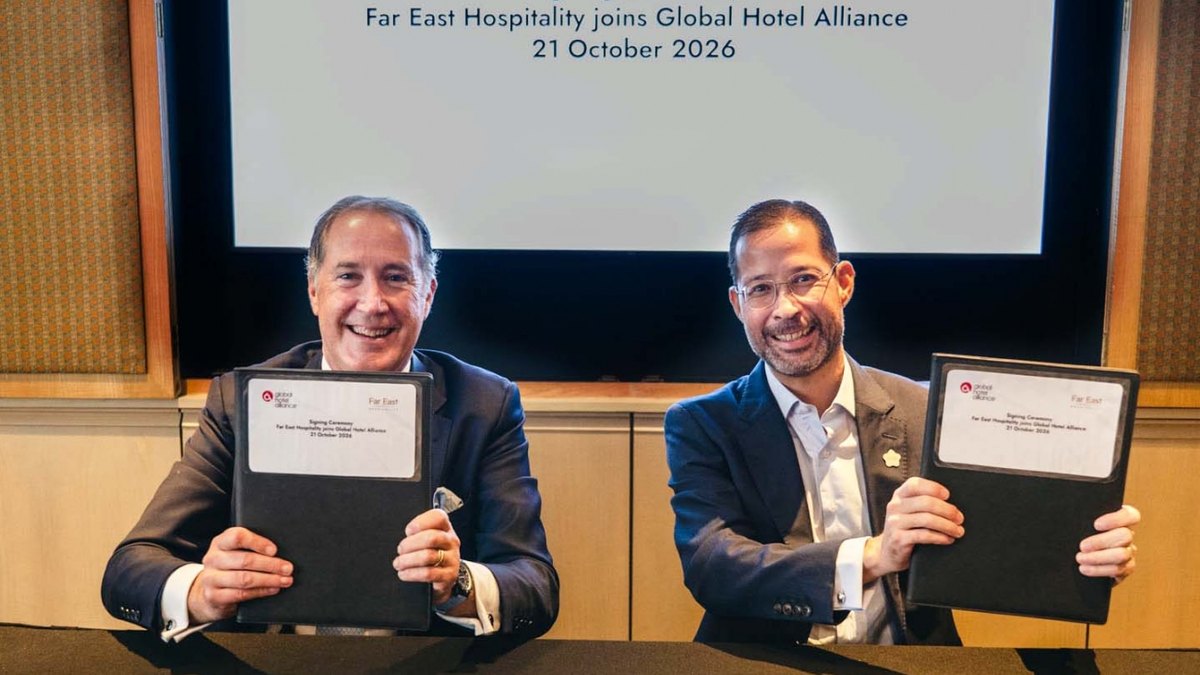
Global Hotel Alliance (GHA) has signed Singapore’s Far East Hospitality (FEH), adding 26 hotels and serviced residences with 6,212 rooms across Singapore, Malaysia and Japan, according to GHA’s signing announcement. Five FEH brands join: Oasia, Quincy, Rendezvous, Village and Far East Collection.
The hotels will plug into GHA DISCOVERY, the alliance’s loyalty programme, which counts more than 38 million members. GHA calls itself the world’s largest alliance of independent hotel brands, with 60 brands and 1,000 hotels in 100 countries.
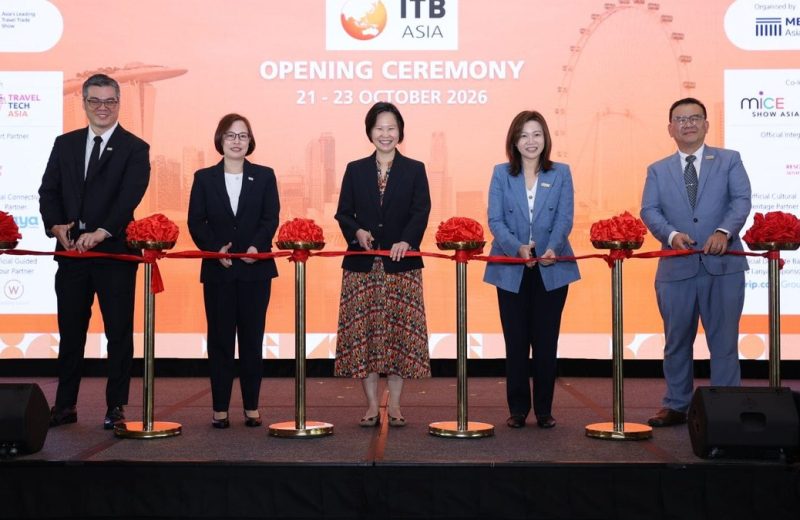
The announcement puts integration in early 2027. FEH Managing Director Mark Rohner gave journalists a firmer date: everything is on track to go live on 1 April 2027. He and GHA CEO Chris Hartley took questions at a media round table on 21 October 2026, on the sidelines of the Hotel Investment Conference Asia-Pacific (HICAP), after signing.
Why AI assistants sit at the centre of the deal
Both executives presented the tie-up as an answer to guests starting their hotel search with AI assistants. The Business Times reported on a GHA survey of 30 GHA hotel brand CEOs in August. Some 91% of those Asia-Pacific leaders expect AI assistants to rank among the most influential booking channels by 2030. For online travel agencies (OTAs), the figure was 18%.
The same survey found 82% of Asia-Pacific respondents name AI recommendations as a leading expected influence on hotel choice, placing them ahead of destination, experiences or events. Thirty executives is a small sample of hotel chiefs, not travellers, but the numbers show where regional operators think demand will be won.
What Far East Hospitality is changing
FEH is redesigning its website and hotel descriptions so that they answer the questions guests put to large language models. In practice that means moving from keyword-driven copy to copy that answers a full question, such as which hotel suits a family stopover.
AI already covers email automation, central reservations and staff scheduling at the group. Rohner added that an AI-driven revenue management system will start next year.
Direct booking vs OTA commission: the gap behind it
Commission explains the urgency. Hartley told reporters that an OTA booking costs a hotel roughly 18% to 20%, whereas a direct booking “may be as low as 5%, potentially 10% or 15%”. Across 6,212 rooms, moving even a few points of volume from OTA to direct changes margin noticeably.
Hartley also gave GHA’s own evidence of how a loyalty programme shifts the mix:
- Two-thirds of GHA bookings arrive through its app.
- Cross-brand revenue has risen 40% so far in 2026.
- Titanium members, who spend 30 or more nights a year with the alliance, have a 2% likelihood of booking via an OTA, against about 50% before.
- GHA has 600,000 members based in Singapore, an audience FEH’s Singapore hotels can now reach.
The Titanium number carries the most weight. A guest with a deep programme relationship mostly stops comparing prices on third-party sites. For 26 hotels, FEH gains a route to that kind of guest.
A warning on cost
Twenty to twenty-five years ago, Hartley said, hotels “lost our inventory to third parties because we were slow to react”. He cautioned that the fight for hotel content in AI search “may be expensive as well”. Hoteliers should not assume AI channels will be cheaper than OTAs. If assistants draw on a handful of data sources, whoever controls those sources can charge for visibility.
What it means for each side
For independent hotels, the FEH approach offers two levers that need no large technology budget: a loyalty programme with scale, and property descriptions that answer real questions. For OTAs, the survey is a signal, given that only 18% of the surveyed CEOs see OTAs among the most influential channels by 2030. For airlines, which chase the same direct relationship through their own loyalty schemes, the logic carries over: the traveller with a programme account is the one least likely to be intermediated.
Who to watch at HICAP 2027
Organisers building hotel distribution and AI sessions for the next HICAP should look at both executives. Hartley can speak to loyalty data across a base of more than 38 million members. Rohner can report on what follows the 1 April 2027 go-live and how the AI revenue management system performs in its first months.
Key takeaway
TravHQ sees this as a template for APAC hotel groups of any size: write each property description as the answer to a guest’s question, and give guests a reason to book direct before an assistant decides for them. Operators should audit their site copy this quarter and measure the commission gap against their current OTA share. Hartley’s point on cost is fair, which means the groups that move first are likely to pay less for visibility.
Topics in this story
Sesh Seshadri
Editor and Head of Partnerships
Subrahmanian Seshadri (Sesh) is a publishing and travel-content veteran with five decades of experience. As the former Director and General Manager of Lonely Planet India, he played a pivotal role in its entry starting in 2012. His career spans Oxford University Press, Dorling Kindersley and digital content, bringing expertise across travel, publishing, and technology.
More from SeshHave a story Sesh should see? Write to editor@travhq.com.