Singapore Tourism Board and Visa sign 3-year deal on spend data
Visa Destinations reaches Singapore in November 2026 under a three-year MOU that ties card data to marketing for repeat, night-time and high-value visitors.

4 min read
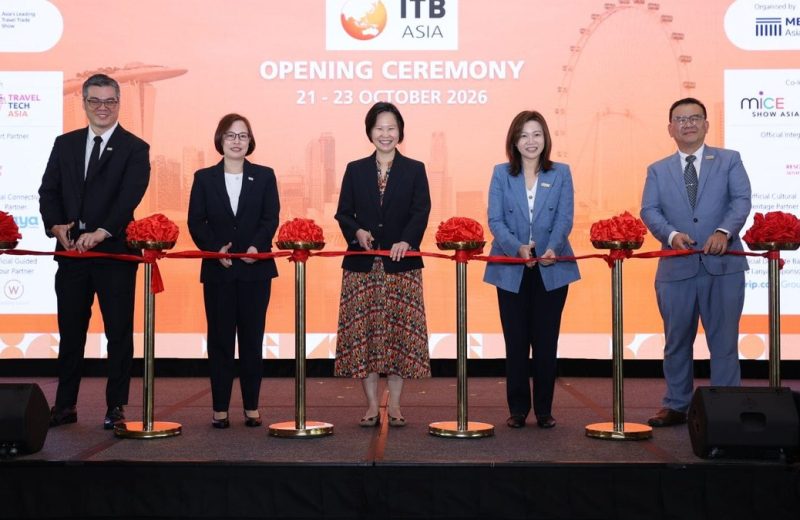
Visa and the Singapore Tourism Board (STB) signed a three-year Memorandum of Understanding on 23 October 2026, according to the Singapore Tourism Board release. The agreement brings Visa’s card marketing and payment data into the way Singapore pursues visitors. The Business Times reported that Visa Destinations will start in Singapore in November 2026.
Adeline Kim, Group Country Manager, Regional Southeast Asia, Visa, put her signature to the document alongside Melissa Ow. Three pillars hold the MOU together. The first is helping travellers discover Singapore’s tourism products, with dining and night-time experiences in front. The second is turning data into insight on where high-value tourism opportunities sit. The third is a programme of co-branded marketing campaigns.
The numbers behind the Visa Destinations launch
The core figure is about repeat travel. VisaNet data for April 2025 to March 2026 shows that people returning to Singapore spend roughly four times what first-time visitors spend. That gap explains the language of the agreement, which talks about high-value growth and not about arrival counts alone. A traveller who comes back, and spends at that rate, is worth considerably more to a hotel or an attraction than a new face.
The card data also shows where Visa customers travel from. VisaNet figures for September 2026 put Australia, Indonesia, Mainland China, Malaysia and the United States among the biggest inbound corridors for cardholders. STB says the list matches its own arrival statistics. For now, then, the card data backs up the existing picture of Singapore’s source markets, and the partners intend to sharpen it.
Under the deal, Visa and STB will combine their market data to read visitor behaviour and then concentrate on the segments with the best prospects for high-value growth. Singapore becomes the second Asia Pacific country to launch Visa Destinations, following Thailand in July 2026. London, New York and Paris are among the other cities in the programme.
Who it affects
Hotels, attractions, DMCs and OTAs that sell Singapore get a new route for co-marketing and offers. The offers will extend two arrangements already in place: a partnership with Pelago by Singapore Airlines covering attractions and tours, and a collaboration with Grab centred on night-time experiences. Pelago and Grab are therefore the first commercial partners in view, and businesses that sit close to either product are best placed to be picked up.
Visa cardholders will receive benefits across five categories: attractions, dining, entertainment, retail and tours. The partners describe these as key spend categories. A property that sells rooms alone has little to place in that list. A hotel with a restaurant, a bar, a tour desk or a shopping arcade has several entry points. DMCs that bundle attractions, tours and dinners map onto the list almost line for line, and OTAs can use it to see which products the programme puts forward.
Airlines and tourism boards in other markets are affected in a different way. They now have a live example of a destination and a payments network agreeing to put their data side by side. The pooled insight is the part to follow, because it is the input that will steer which segments STB backs with marketing money.
What changed compared with before
Visa and STB have worked together already. Earlier Visa, STB and Pelago campaigns ran under the names ‘Seasons. Made in Singapore’ and ‘Non-stop Fun’. The new co-branded campaigns will be anchored on Visa Destinations and on STB’s Passion Made Possible brand, and they build on that earlier work. The difference lies in the structure: a three-year term, a stated insights pillar, and dining and night-time discovery given a central place.
The second change is the role of evidence. Destination marketing has often leaned on arrival counts and surveys. Here the planning input includes what cardholders actually spend, split by category and by corridor. The stated targets are repeat, night-time and high-value visitors. Partners whose products suit those visitors are the likeliest to find their own campaigns lining up with what the destination wants to promote.
Key takeaway
Hotels, attractions, DMCs and OTAs selling Singapore should match their products to the five spend categories before the November start, and build offers aimed at repeat and night-time visitors from the five large corridors. Campaign material that fits the Passion Made Possible brand is worth preparing early, since the co-branded work will sit on it. Tourism boards and travel-tech firms in other markets should take note that payment data is now being used to decide which segments a destination backs.
Topics in this story
Sanjita Majumdar
Guest Writer & Marketing Alliances
Sanjita comes from publishing and editorial work, most recently at PageMajik, where she helps publishers find, assess and bring good content to market. At TravHQ she writes for the site and builds marketing alliances with people and businesses across travel tech and tourism in Asia-Pacific and beyond.
More from SanjitaHave a story Sanjita should see? Write to editor@travhq.com.