Canada’s TripFinder and ResortFinder list 700+ resorts and tours
Calgary founder Shekhar Parmar built TripFinder and ResortFinder to end the spreadsheet-and-tabs routine of trip planning, with AI guides and a human advisor.

4 min read
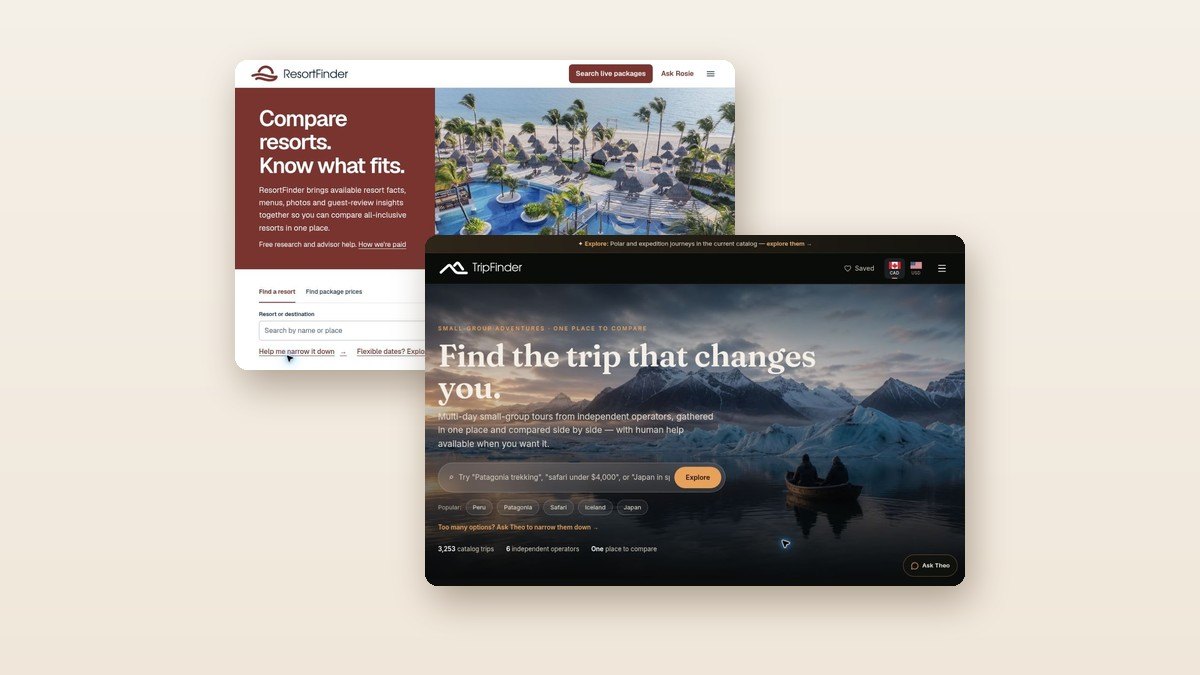
TripFinder and ResortFinder, two comparison sites from a Canadian travel startup, list more than 700 resort profiles alongside multi-day small-group tours from independent operators. Calgary-based founder and CEO Shekhar Parmar runs both. TravHQ profiles them here from the written answers the company sent to TravHQ’s five startup questions.
How it started
Parmar’s starting point was his own trip planning. It meant a spreadsheet, some fifty open tabs and constant switching to compare details.
His questions were practical ones. Which cities does a tour actually visit? How many meals are included? What does the price difference buy? The information existed, but the traveller had to line it up alone.
Resorts followed the same habit. Before choosing, Parmar combed through Tripadvisor, YouTube, Reddit, Google Reviews and the resort’s own site. ResortFinder gathers that material in one place and organises it around what a guest cares about: pools, dining, a good beach or a quiet room. His view is that two resorts with an identical rating can offer very different stays.
What it looks like
TripFinder collects multi-day small-group tours from selected independent operators. Travellers compare routes, duration, pace and inclusions side by side. It is aimed at solo travellers, couples and friends who like the idea of a guided trip and want to see the options first.
Theo is the site’s AI guide. A traveller describes the trip in ordinary language, asks follow-up questions and receives matching tours from the catalogue, with no need to turn each preference into a filter. Travellers can also request help from a Canadian travel advisor, and no payment is needed to ask for help or a quote.
ResortFinder combines property details, photos, videos and insights drawn from guest reviews. Its AI-assisted guide, Rosie, supports resort research. Canadian travellers can then browse flight-and-hotel packages or take a shortlist to an advisor.
Two features deal with price. Best Price lists the cheapest package prices on display, split by resort, month and departure airport, so a traveller with flexible dates can spot a promising month and then check the exact package. Price Watch lets a traveller set a target price on a resort and get notified when a matching deal turns up.
The company notes that rates and availability can change, that the final quote or checkout confirms the package and the total payable, and that its AI can err, so key trip details should be checked with an advisor before booking.
The business
The company has not shared traveller, enquiry, booking or revenue totals, and has named no funding or investor. The 700+ figure measures the research catalogue, not customer or booking volume. On the tour side, the site carries offers from several independent operators, side-by-side comparison and Theo.
Bookings go through The Travel Agent Next Door, the host agency, with a human advisor in the loop. Brandi Leanna is the advisor named on the public sites. She helps travellers refine a shortlist, confirm current details and arrange the booking.
Parmar also founded TravelFinder. He is a serial entrepreneur and former lawyer, and the site describes him as a founder and travel writer. He has more than ten years in healthcare companies, held an executive post at a listed firm and worked on teams that raised nine-figure sums. His wider work includes the Lexter legal-industry platforms, and he writes about his own journeys at SP Travel.
For tour operators and resorts, the offer is visibility on detail. A traveller can see why an itinerary or property suits them, instead of judging it on a headline price or a star rating.
The next twelve months
The TripFinder roadmap has four items: longer stays, the company’s own purpose-driven trips, an easier way to find tours that include airfare from Canadian departure markets, and Price Watch for tours, which would alert a traveller when an offer hits their target price.
These are planned additions with no release dates announced. Parmar’s stated aim is unchanged: take the repetitive research off travellers so they can spend their energy choosing a trip they are excited about.
Key takeaway
The product comes from one buyer’s own pain and is organised around the questions a traveller really asks. Operators can borrow the habit of putting inclusions, cities and meals up front. OTAs can borrow the pairing of AI search with a named human advisor and a plain note on where the AI can be wrong. The company is early and has shared no traction totals, so we would watch bookings as the next proof point.
Building a travel startup? TravHQ wants to hear your story. Pitch it to TravHQ.
Topics in this story
Daksh Sharma
Chief Editor, TravHQ
Daksh Sharma is a travel tech enthusiast and a prolific voice in the B2B travel industry. A speaker at numerous travel-tech events, he is at the forefront of digital and AI adoption in travel. He conducts AI training and implementation programmes and works as a digital advisor to a number of global B2B brands.
More from DakshHave a story Daksh should see? Write to editor@travhq.com.