Alibaba’s map app Amap and the Singapore Tourism Board launched Singapore Street Stars on 18 September, a set of seven themed rankings covering 104 attractions, neighbourhoods and lifestyle places across the city state, the two partners announced in a joint release.
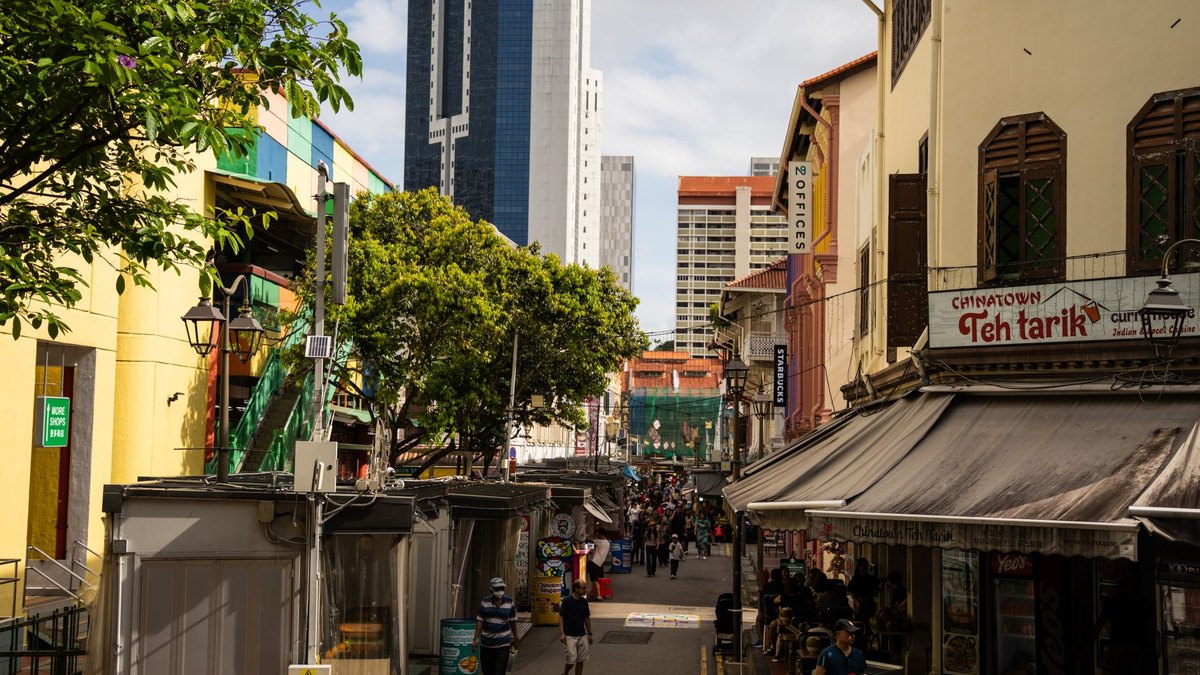
The lists sit inside the Amap app and follow the Street Stars format Amap introduced a year ago. The seven themes are Photo-Perfect Spots, Where Family Fun Begins, After-Dark Adventures, Next-Gen Crowd Favourites, Nature’s Reset, Curated Finds, and Local Life, Real Finds. Gardens by the Bay, Merlion Park and Sentosa Island appear alongside Joo Chiat Road, Haji Lane, Maxwell Food Centre and Tiong Bahru Market, so the rankings mix the postcard sights with the hawker centres and side streets that repeat visitors look for.
What Amap Street Stars does
Amap launched Street Stars on 10 September 2025 as an AI ranking for the app’s 170 million daily active users, covering more than 300 cities and 1.6 million local businesses at launch, Alibaba Group said at the time. The ranking synthesises navigation patterns and user reviews rather than editorial picks. It also uses user-consented trust metrics such as credit ratings to counter biased reviews and rating manipulation. Amap CEO Guo Ning put it in one line: “Authenticity is the ranking’s core principle.”
Amap backed the original launch with over 1 billion RMB in subsidies for consumer transport and offline spending, and said it expected the lists to bring an additional 10 million daily customers to listed businesses. The Singapore release names no subsidy and no fee for the businesses listed. The lists are live in the app now.
Who it hits
The audience is the Chinese traveller planning or already on a Singapore trip. Amap platform data show the average daily number of users searching Singapore-related content in the 2026 summer season rose 52.3% against June 2026. Attraction searches rose 91.2%, shopping searches 87.4% and dining searches 70.9%. Those are searches on a map app, which means they happen close to the point of decision: which hawker centre tonight, which mall this afternoon.
For a hotel, attraction, restaurant or retailer in Singapore, that makes a Chinese map app a discovery channel with its own ranking algorithm. TechNode Global, reporting the launch, noted that participating restaurants, hotels and retailers gain another route into the travel behaviour of Chinese visitors using Amap before and during trips. A DMC or OTA selling Singapore to mainland clients now has a third-party list its customers will see whether or not the operator’s own itinerary agrees with it.
The timing matters. Singapore Tourism Board’s August 2026 arrivals figures show 1.61 million international visitors, down 0.3% year on year, and January to August arrivals of 11.43 million, down 1.7%. Mainland China was the largest source market in August at 435,440 arrivals, up 9.4%, with an average stay of 3.71 days, according to Travel And Tour World. The one market growing is the one this ranking serves.
What the partners say
Andrew Phua, Chief Representative and Executive Director, Greater China, at the Singapore Tourism Board, said the rankings “rely on actual users’ preferences reflecting authentic recommendations”. Liu Li, General Manager of Amap’s Information Platform Business, said Amap “will continue to explore localised rankings and services suited to different countries and regions”, which reads as a signal that Singapore is the first stop rather than the only one.
What came before
Before 18 September, Amap’s ranking covered businesses in the 300-plus cities of its original launch, and a Singapore business had no entry in it. Street Stars is also different from a listing a business writes itself. Navigation data and reviews from Amap users decide the rank, and the trust layer built to counter rating manipulation filters what counts. That leaves a Singapore operator with one lever: the experience visitors have and what they say about it afterwards.
Key takeaway
Any Singapore hotel, attraction, restaurant or retailer that counts on mainland China arrivals should open Amap this week, find whether it appears in one of the seven lists, and read what Amap users say about it, because that content now shapes the choices of the largest source market. OTAs and DMCs selling Singapore to China should check their itineraries against the 104 picks before a client does. Tourism boards elsewhere in APAC can wait, but we would read Liu Li’s line about other countries and regions as notice that Amap will come calling.